Indian Craftsmanship: The Story Behind India's Handmade Heritage
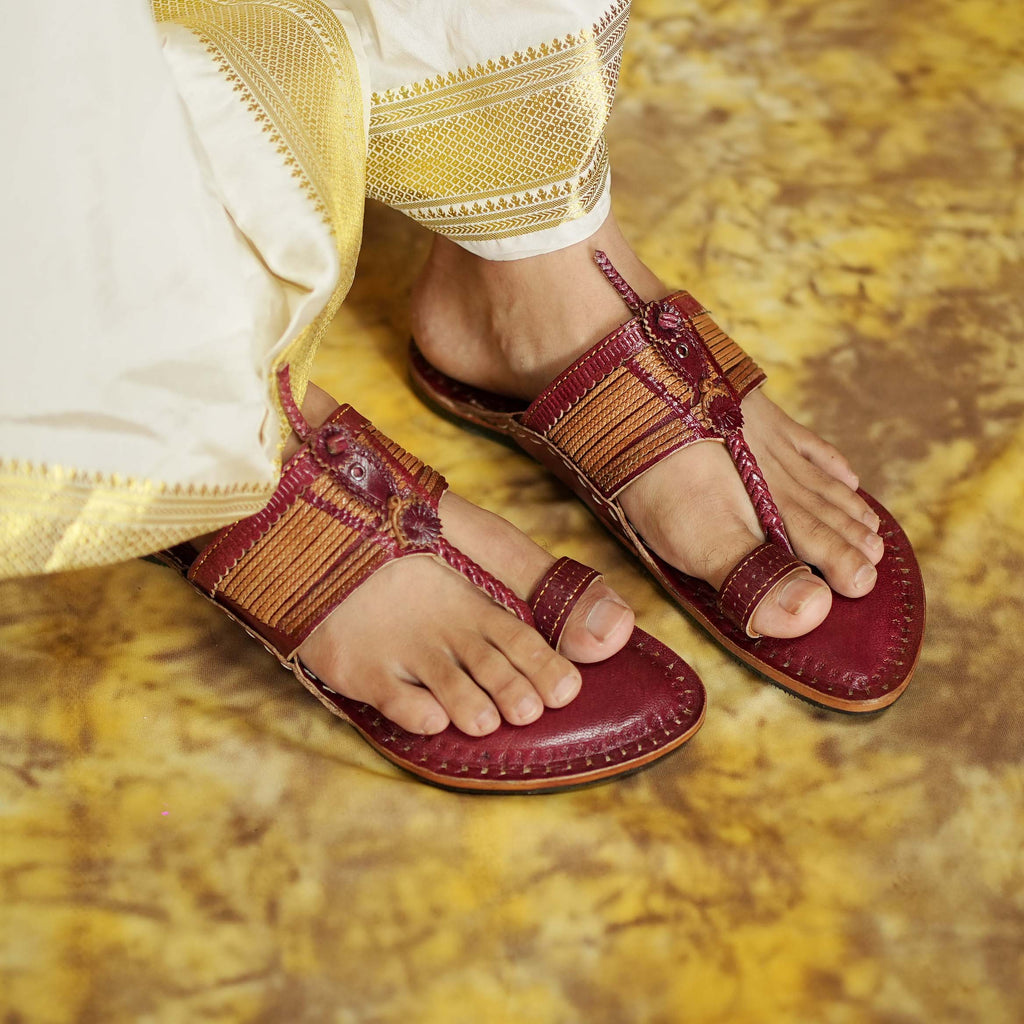
Indian craftsmanship is the centuries-old practice of creating products entirely by hand using techniques passed down through generations of artisan families. From Kolhapuri chappals to Banarasi silk, this living tradition combines regional skill, natural materials, and cultural identity in a way no machine can replicate.
For shoppers searching for authentic, sustainable, and meaningful products, understanding this heritage explains why handmade still matters in 2026.
This guide walks through what Indian craftsmanship really means, how it differs from mass production, and how artisan partnerships – like the ones behind every Kalapuri product – keep these traditions alive today.
What is Indian craftsmanship?
Indian craftsmanship refers to the hand-based production methods that Indian artisans have refined over hundreds, sometimes thousands, of years. It is a vast ecosystem of regional crafts, each tied to a specific community, climate, and set of locally available materials.
India's craft traditions developed along trade routes, royal patronage, and rural economies long before industrialisation reached the subcontinent. Each region developed its own specialty, shaped by local resources and the needs of the communities around it. Skills were rarely written down; they were taught hand-to-hand, parent to child, master to apprentice, which is why so much of this knowledge is described as generational rather than formal.
A few examples show just how diverse this heritage is:
-
Kolhapuri chappals are hand-stitched leather footwear from Maharashtra and Karnataka, made using vegetable-tanned leather and techniques over 800 years old.
-
Banarasi silk are intricately woven silk sarees from Varanasi, known for gold and silver brocade work.
-
Blue pottery is Persian-influenced ceramic art from Jaipur, made without clay, using a quartz-based dough instead
-
Bidri art is blackened metal inlay work from Karnataka, dating back to the Bahmani Sultanate.
-
Brassware are hand-engraved metal items from Moradabad, prized for intricate detailing.
-
Handwoven baskets are utility and decorative baskets made from natural fibres like cane, bamboo, and grass, varying by region
What ties all of these together is that they're cultural records, carrying regional identity in every stitch, weave, or engraving.
Why Indian handicrafts continue to inspire the world
Handmade Indian products have a global reputation, and it isn't accidental. A few qualities consistently set them apart.
-
Authenticity: Each piece is made by a real person, often using techniques specific to their region. No two pieces are produced on an assembly line, which means no two are perfectly identical either.
-
Craftsmanship: Hand stitching, hand carving, and hand weaving require years of training. A skilled Kolhapuri chappal maker, for instance, may take years to master the leather-cutting and braiding techniques needed for a finished pair.
-
Durability: Hand-finished leather goods and naturally dyed textiles are typically built to last years, not seasons. It is a sharp contrast to fast-fashion alternatives designed for short-term use.
-
Cultural identity: Buying a handcrafted product from a specific region connects the buyer to that region's history in a tangible way.
This is part of why international buyers, interior decorators, and conscious shoppers increasingly look for "Indian handicrafts" rather than generic alternatives. The value isn't just aesthetic, it's historical and human.
The journey of handmade products: From artisan to customer
Understanding how a handmade product comes together helps explain why it costs what it does, and why it's worth it.
-
Sourcing raw materials: For leather goods, this typically starts with vegetable-tanned leather, a slower, chemical-free tanning process using tree bark and natural extracts instead of synthetic chromium compounds.
-
Hand cutting: Artisans cut leather or fabric by hand, often using templates refined over generations, accounting for the natural grain and texture of each material.
-
Stitching: This is usually the most time-intensive stage. Kolhapuri chappals, for example, rely on traditional braided leather stitching that machines cannot replicate without losing the product's structural flexibility.
-
Polishing and finishing: Edges are smoothed, surfaces are conditioned, and natural oils or dyes are applied by hand.
-
Quality inspection: Each finished piece is checked individually rather than sampled in batches, since no automated line is producing thousands of identical units.
Every stage depends on the artisan's judgment rather than a fixed machine setting. That’s why small variations in handmade products are a sign of authenticity, not a flaw.
Meet the artisans behind every Kalapuri product

Behind every handcrafted item is a person who is often part of a multi-generational artisan family. Their livelihood depends on these traditional skills surviving.
Many of India's leather and craft clusters are rooted in rural communities, where artisan work is one of the few sources of stable, skilled income outside agriculture. Women artisans play a significant role in several of these crafts, particularly in basket weaving, embroidery, and jewellery-making, often working from home workshops that fit around family responsibilities.
For these communities, every order placed for a handmade product is more than a transaction. It's a direct support for a skill that might otherwise fade as younger generations move toward urban, non-craft jobs. Preserving these livelihoods means preserving the craft itself; the two cannot be separated.
Handmade vs machine-made products
|
Handmade |
Machine-made |
|---|---|
|
Unique, with natural variation |
Identical, uniform output |
|
Sustainable, low-waste production |
Mass production, higher waste |
|
Crafted by skilled artisans |
Automated manufacturing |
|
Long-lasting with proper care |
Often designed for shorter use cycles |
|
Natural materials (leather, fibres, dyes) |
Frequently synthetic materials |
Neither approach is "wrong" but they serve different purposes. Machine-made products prioritise speed and consistency at scale. Handmade products in India prioritise individuality, durability, and a direct link to the people who made them.
Why handmade products are more sustainable

Handcrafted goods align closely with what's now called slow fashion. It is a deliberate move away from rapid production cycles and disposable items.
A few reasons handmade products in India tend to be more sustainable:
-
Lower waste: Small-batch, made-to-order production avoids the overproduction common in factory settings.
-
Biodegradable leather: Vegetable-tanned leather breaks down naturally over time, unlike chrome-tanned leather, which involves heavy metals.
-
Natural dyes: Plant- and mineral-based dyes reduce the chemical runoff associated with synthetic dyeing processes.
-
Long product life: A well-made leather product can be resoled, reconditioned, and used for years, reducing the need for frequent replacement.
-
Conscious shopping: Buying fewer, better-made items naturally reduces overall consumption compared to fast-fashion cycles.
This is a structural difference in how the product is made from the very first step.
Indian craftsmanship in everyday life

Handcrafted Indian products show up in far more places than most people realise:
-
Footwear: Kolhapuri chappals worn casually or paired with festive outfits
-
Handbags: leather totes, slings, and clutches made with hand-stitched detailing
-
Jewellery: traditional Kolhapuri thushi jewellery using beads, metal, and thread work
-
Storage baskets: handwoven baskets used for home organisation and décor
-
Gifting: handcrafted items are increasingly chosen for weddings, festivals, and corporate gifting, since they carry more meaning than mass-produced alternatives
This everyday presence is part of why craftsmanship hasn't disappeared. Even in a heavily industrialised consumer market, there's consistent, practical demand for it.
How Kalapuri preserves traditional Indian craftsmanship
Kalapuri works directly with artisan partners to keep traditional methods at the centre of every product, rather than treating handmade as a marketing label.
This includes:
-
Artisan partnerships built on consistent, long-term collaboration rather than one-off sourcing
-
Ethical sourcing of materials, including vegetable-tanned leather
-
Premium leather selected for durability and natural finish
-
Traditional methods, including hand stitching and regional techniques specific to Kolhapuri craftsmanship
-
Fair wages that support artisan households and encourage younger Indian artisans to continue the craft
The goal is to make sure the people who hold this knowledge can keep practising it, and that customers get a genuine, well-made product in return.
How to identify authentic handmade products
Not everything labelled "handmade" actually is. Here's a simple checklist to verify authenticity:

-
Hand stitching: look closely at seams; hand stitching is rarely perfectly uniform
-
Natural leather: genuine vegetable-tanned leather has a distinct smell and develops a patina over time
-
Minor variations: slight differences between similar products are a sign of handwork, not a defect
-
Traditional finishing: edges, soles, or weave patterns specific to the regional technique
-
Artisan details: brands that disclose information about who made the product and how
If a seller can't explain where or how a product was made, that's usually a sign it isn't genuinely handcrafted.
Conclusion
Every handcrafted product carries generations of skill, culture, and dedication. Choosing authentic handmade products isn't just about owning something beautiful–it's about preserving India's living heritage, supporting artisan livelihoods, and ensuring these traditions continue for future generations.
Frequently asked questions
What is Indian craftsmanship?
Indian craftsmanship is the practice of making products entirely by hand using traditional, region-specific techniques passed down through generations.
Why are handmade products valuable?
Handmade products in India are valuable because they involve significant skill, time, and individual attention, resulting in unique, durable items that machine production can't replicate at the same quality.
What makes Indian handicrafts unique?
Their regional diversity, generational knowledge, and use of natural materials make traditional Indian crafts unique. Each craft cluster has techniques specific to its history and geography.
Why are handcrafted products sustainable?
Handcrafted products typically use natural materials, smaller production batches, and traditional processes like vegetable tanning, which generate less waste and pollution than industrial manufacturing.
How do Indian artisans preserve traditional crafts?
Artisans preserve traditional crafts primarily through direct teaching by passing techniques from one generation to the next within families and craft communities.
What is the difference between handmade and machine-made products?
Handmade products are individually crafted with natural variation and artisan skill, while machine-made products are mass-produced, uniform, and typically rely more heavily on synthetic materials.
How are Kolhapuri chappals made?
Kolhapuri chappals are made using vegetable-tanned leather, hand-cut and shaped, then hand-stitched using traditional braiding techniques before being finished and polished by hand.
What is vegetable-tanned leather?
Vegetable-tanned leather is leather treated using natural tannins from tree bark and plant extracts, rather than synthetic chemicals, making it more biodegradable and prone to developing a natural patina over time.