How to Style a Kolhapuri Thushi: A Complete Guide

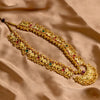
The Kolhapuri Thushi is one of Maharashtra's most recognisable necklace styles — a dense, close-fitting string of gold-toned beads that has been part of the region's bridal and festive wardrobe for generations. Its layered, textured look pairs naturally with sarees and nauvari drapes, but it also works surprisingly well with modern silhouettes when styled with a lighter hand.

This guide covers what makes a Thushi distinct from other Kolhapuri necklace styles, how to style it for different occasions, and how to choose the right length and fit.
What is a Kolhapuri Thushi Necklace?
A Thushi is a short, multi-strand necklace made of small gold-toned beads packed tightly together, usually finished with an adjustable gonda (dori) closure at the back. The close, layered bead structure is what sets it apart from other traditional Kolhapuri pieces:
Thushi — dense, multi-strand bead necklace, usually 13–16 cm
Mangalsutra — black and gold beads with a central pendant, worn by married women
Gadi Tik / Vajra Tik — a broad, structured choker style
Pote / Saaj — longer bead necklaces, often layered with pendants
Each is handcrafted using a copper base with gold plating, which keeps the piece lightweight enough for everyday wear while holding the rich, antique finish the style is known for.
How to Style a Thushi for Different Occasions
Weddings and bridal functions

For bridal wear, a Thushi is rarely worn alone. Layer it with a longer Haar or Saaj to build height and volume against a heavy silk saree or lehenga. Choosing a Thushi with kundan or stone detailing adds a bit more shine for the occasion without moving away from the traditional silhouette.
Festive wear

For Diwali, Ganesh Chaturthi, or Navratri, a single Thushi worn close to the neck pairs well with a cotton or silk saree and simple jhumka earrings. This is where the Thushi's texture does most of the work — it doesn't need to be layered to stand out.
Daily and minimal wear
A shorter, lighter Thushi works well over kurtas and even Indo-western outfits. Worn alone with minimal earrings, it reads as understated rather than ceremonial, which is why it has held up as one of the more versatile pieces in Kolhapuri jewellery.
What to Pair a Thushi With
Sarees: Works with both silk and cotton drapes; the close fit keeps it from competing with an elaborate saree border
Blouses: Pairs well with both high-neck and boat-neck blouses, since the necklace sits close to the collarbone
Earrings: Simple gold studs or small jhumkas keep the focus on the necklace; avoid pairing with another statement piece
Bangles: Traditional gold or glass bangles complete the look without overpowering it
Choosing the Right Length and Fit
Because a Thushi sits close to the neck, length matters more than it does with longer necklace styles. Most Thushi necklaces fall between 13–16 cm and are finished with an adjustable gonda (dori) closure, so they can be fitted to fully cover shorter or longer necks. For a full breakdown of length ranges across Thushi, Mangalsutra, Gadi Tik, Pote, and Haar styles, see our Jewellery Size & Length Guide.
Caring for Your Thushi
Kolhapuri jewellery is handcrafted from a copper base with gold plating, so a little care keeps the finish looking new for longer:
Keep it away from moisture, perfume, sweat, and liquid chemicals
Store it in an airtight box or zip pouch when not in use
Wipe gently with a soft, dry cloth after each wear
Put it on last, after makeup and perfume, and remove it first when undressing
Frequently Asked Questions
What is the difference between a Thushi and a Mangalsutra?
A Thushi is a dense, multi-strand bead necklace with no religious significance, while a Mangalsutra uses black and gold beads with a pendant and is traditionally worn by married women as a symbol of marriage.
Can a Thushi be worn with Western outfits?
Yes. A shorter, lighter Thushi worn alone works well as a statement piece over simple Indo-western or Western tops.
How do I know what length Thushi to buy?
Most Thushi necklaces range from 13–16 cm and come with an adjustable closure. See our size and length guide for full details.
Is a Thushi suitable for daily wear?
Yes, lighter Thushi designs are commonly worn daily, especially when paired with minimal earrings and kept unlayered.
Explore our full Kolhapuri Thushi collection, or browse by occasion in our Bridal, Festive, and Daily Wear jewellery collections.