Kolhapuri Jewellery Heritage Guide: Craft, Symbolism & Styles
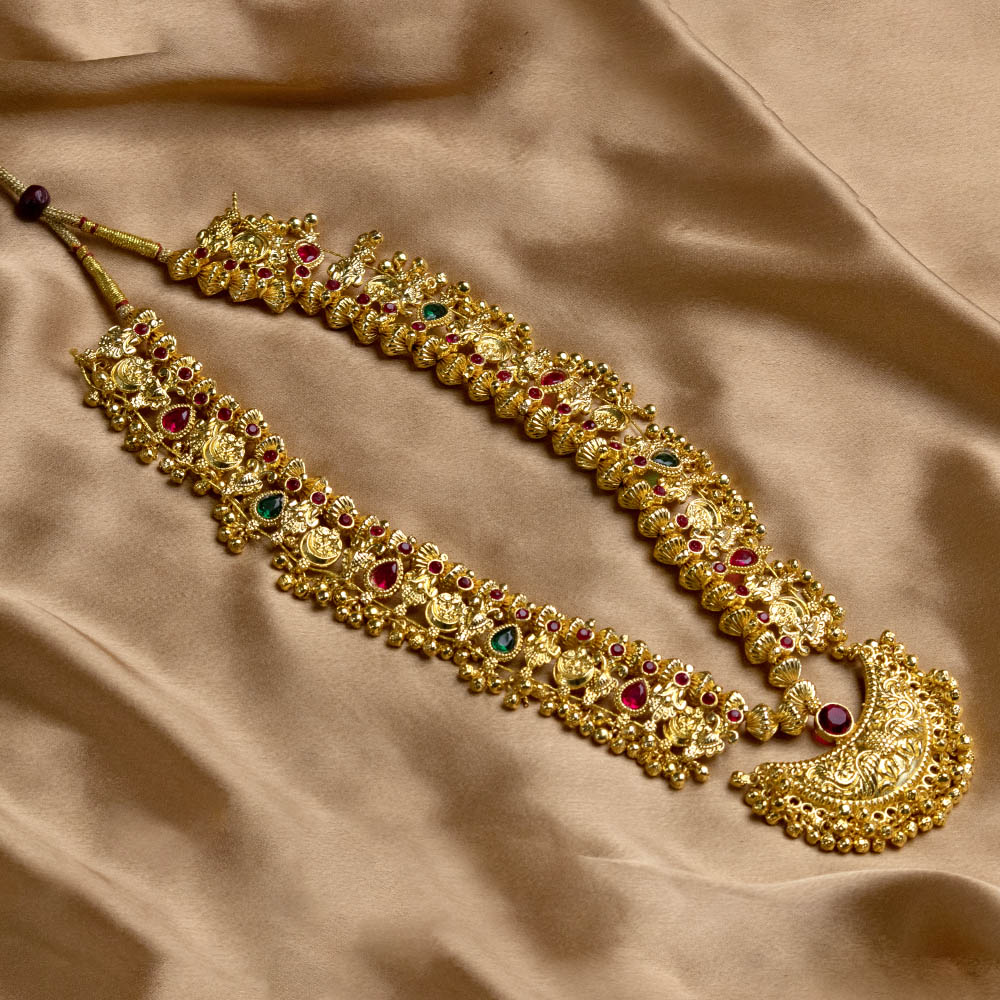
Kolhapur is best known for its chappals, but the city's artisan clusters have shaped another craft with just as much history: Kolhapuri jewellery. Made from a copper base with gold plating and finished by hand, these pieces have been part of Maharashtra's bridal and festive wardrobe across generations, carried forward largely by women artisans working from home workshops.

This guide looks at where Kolhapuri jewellery comes from, the different traditional styles, the craft behind each piece, and how Kalapuri works to keep this heritage alive today.
The Roots of Kolhapuri Jewellery
Kolhapuri jewellery grew out of the same Deccan artisan tradition that produced Kolhapuri chappals — rooted in Maharashtra, shaped by regional taste, and passed down hand-to-hand within artisan families rather than through formal training. Unlike heavier South Indian temple jewellery, Kolhapuri pieces favour dense beadwork, antique gold finishes, and motifs drawn from everyday Maharashtrian life: florals, temple architecture, and coin imagery.
What has kept the craft alive is its place in everyday ritual. A Thushi or Mangalsutra isn't occasional wear — it moves from daily use to festive occasions to bridal trousseaus, which has meant steady demand for the artisans who make it.
Traditional Styles and What They Mean
"Kolhapuri jewellery" isn't one design — it's a family of styles, each with its own silhouette and occasion:
Thushi — A dense, multi-strand bead necklace, typically 13–16 cm, worn close to the neck. Shop Thushi
Mangalsutra — Black and gold beads with a central pendant; traditionally worn by married women as a symbol of marriage, typically 14–18 cm.
Gadi Tik / Vajra Tik — A broad, structured choker, often the centrepiece of a bridal set, typically 15–17 cm.
Pote / Jondhale — A longer bead necklace, often layered with a pendant, typically 18–22 cm.
Saaj — A layered necklace combining floral motifs with bead chains, worn for festive and bridal occasions.
Haar / Mala — A long necklace, typically 20–26 cm, worn to add height and volume against heavier bridal outfits.


For exact length ranges and fit guidance across every style, see our Jewellery Size & Length Guide.
The Craft Behind Every Piece

Every Kolhapuri jewellery piece starts with a premium copper base, chosen for its strength and workability, coated with a high-quality gold plating to give it the rich, long-lasting finish the style is recognised for. Necklaces are typically finished with an adjustable gonda (dori) closure — a thread-based tie that lets the piece be fitted to the wearer — while matching earrings usually come as golden metal studs.
The bead-stringing, stone-setting, and pendant work are done by hand, which is why two pieces in the same design are never quite identical — a mark of handcraft rather than a flaw.
Symbolism in Kolhapuri Jewellery
Many of the motifs used across Kolhapuri jewellery carry meaning beyond decoration:
Temple motifs — drawn from South Indian and Maharashtrian temple architecture, often used in choker and Gadi Tik designs
Lakshmi coin (Putali) motifs — coin-shaped pendants symbolising prosperity, common in bridal Haar designs
Floral patterns — used across Saaj and pendant necklaces, reflecting nature-based motifs common in Maharashtrian craft
Peacock motifs — associated with grace and often featured in grand bridal chokers
How This Heritage Is Preserved Today
Like much of India's handcraft economy, Kolhapuri jewellery-making is sustained by artisan families — often women working from home, fitting the craft around household responsibilities. Every piece made and sold is what keeps that skill in active use rather than fading out with the next generation.
Kalapuri works directly with these artisan partners, using consistent, long-term collaboration and fair wages to keep traditional Kolhapuri jewellery-making viable as a livelihood, not just as a design reference.
Bringing Kolhapuri Heritage Into Modern Wardrobes
Traditional doesn't have to mean occasional. A single Thushi or minimal Pote works as easily over a kurta as it does with a saree, while layered Saaj and Haar pieces remain the natural choice for weddings and festive occasions. For a closer look at styling one specific piece, read our guide on how to style a Kolhapuri Thushi.
Frequently Asked Questions
What makes Kolhapuri jewellery different from other Indian traditional jewellery?
Kolhapuri jewellery is distinguished by its dense beadwork, antique gold finish over a copper base, and motifs specific to Maharashtrian craft, such as temple, floral, and coin designs.
What is Kolhapuri jewellery made of?
Most pieces are made from a copper base coated with gold plating, giving them a rich finish while keeping them lightweight for regular wear.
What is the difference between Thushi, Mangalsutra, and Saaj?
A Thushi is a dense bead necklace with no religious meaning, a Mangalsutra uses black and gold beads with a pendant and is worn by married women, and a Saaj is a layered necklace combining floral motifs with bead chains, typically for festive or bridal wear.
Who makes Kolhapuri jewellery?
Kolhapuri jewellery is largely handcrafted by artisan families, with women artisans playing a significant role, often working from home workshops that fit around family responsibilities.
Explore the full range in our All Jewellery collection, or browse by tradition in our Shop by Tradition collection.